Winter Greens in Nadvirna: How to Ensure an Early Harvest of Dill and Parsley
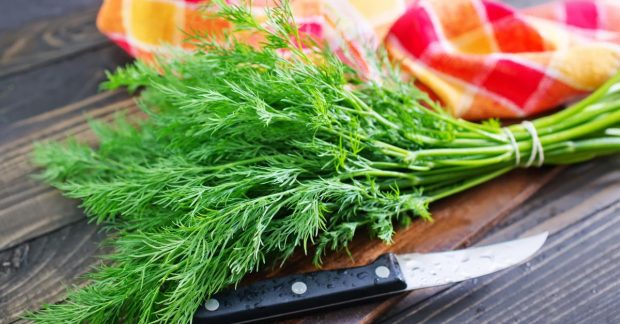
Residents of the Nadvirna community are advised to use the winter sowing method for greens to harvest several weeks earlier than usual.
 💼Economy
Photo: UNIAN
Key points
- Sowing should occur when temperatures stay below 5-7°C.
- Increase seed quantity by 20% to account for winter losses.
- Do not water the beds after sowing to prevent premature germination.
For the residents of Nadvirna and surrounding villages who are actively involved in home gardening, late autumn is not just a time to close the season but an opportunity to lay the foundation for a future harvest. Sowing dill and parsley before winter is becoming an increasingly popular solution among local gardeners. This approach allows plants to harden off, become more resistant to diseases, and sprout immediately after the snow melts, when the soil is maximally saturated with moisture.
Optimal Timing and Weather Conditions
The main criterion for starting work is the establishment of consistently low temperatures. Experts recommend sowing when night frosts become regular and daytime temperatures do not exceed 5–7 degrees Celsius for a week. Typically, this period falls at the end of November or the beginning of December. It is important not to rush: if seeds are planted during a long warm spell, they may sprout prematurely and perish from subsequent frosts. A traditional sign to start work is the complete falling of leaves from trees and the appearance of the first ice crust on puddles.
Soil Preparation and Sowing Technology
Site preparation should begin in advance while the ground is still soft. It is recommended to dig furrows about 3 centimeters deep, maintaining a distance of 25 centimeters between them. The sowing procedure itself has its own specifics:
- Seeds are placed in slightly frozen soil;
- The number of seeds should be increased by about 20% compared to spring sowing;
- Instead of watering, which is strictly forbidden, the beds are covered with dry soil or peat;
- In case of a snowless winter, the crops should be mulched with dry leaves or compost.
Advantages of the Winter Method
Winter crops enter a state of dormancy underground and begin to develop naturally in mid-spring. Thanks to melting snow, they receive the necessary energy and moisture without additional human intervention. As a result, gardeners get strong greens that are not afraid of spring frosts and are ready for consumption much earlier than those who wait for traditional spring planting. The main thing is to make sure that the selected seed varieties are indeed suitable for winter cultivation.
Source UNIAN — unian.ua/lite/ogorod/kak-posadit-ukrop-pod-zimu-i-petrushku-sroki-i… ↗
Read next
 🚌Transport
Service vs. Street Taxis: TV Host Shares Experience with Ride-Hailing Apps
TV presenter Anastasiya Daugule shared her experience using taxis in Lviv and Kyiv, comparing prices between street drivers and ride-hailing apps.
 🛡️Security
Russian casualty statistics: over 92% of Russian military deaths are combat-related
Analysis of leaked Rosstat data reveals that the vast majority of deaths in the Russian army since 2022 are directly linked to combat operations.
 🛡️Security
NATO considers bolstering eastern flank following Russian missile incidents in Poland
The Alliance is discussing the deployment of additional forces in Europe in response to the violation of Polish airspace by Russian objects.
 🏙️City
Energy Infrastructure Protection: President Holds Meeting on System Stabilization
Volodymyr Zelenskyy held a working meeting to strengthen Ukraine's energy sector and restore power supply in affected regions.
 👥Society
The Psychology of Queuing: Why We Let Others Go First
Psychologists explain that the habit of letting people with fewer items go ahead in a checkout line is a sign of empathy and situational awareness.
 🚨Events
Weather warning: cyclone approaching Nadvirna
A sharp change in weather is expected across Ukraine on November 24 due to an active southern cyclone. Residents of Nadvirna are warned about icy conditions and strong wi…